Cairo,Egypt
Follow us
CONSTRUCTIVE WET LANDS
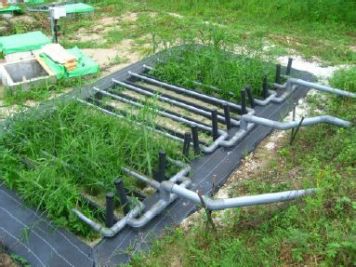
Since dawn of history, different natural factors such as plants played an important role in saving and preserving the sustainability of our water resources by cleaning it again to the nature. Nowadays, we are proceeding on researches to use this natural phenomenon in an application scale. This is called Constructive Wet Lands (CWs).
A constructed wetland (CW) is an artificial wetland consists of sequence of engineered water bodies created for filtering water streams from waterborne pollutants leading to treatment of municipal sewage or industrial wastewater, greywater or storm water runoff. It may also be created for land reclamation after mining, and oil refineries.
It is designed of engineered systems that use natural functions of vegetation, soil, and organisms to treat different water streams which can act as a biofilter or removing sediments and pollutants such as heavy metals from the water.
The Vegetation (roots, stems, and leaves) in a wetland provides a substrate upon which microorganisms can grow as they break down organic materials. This community of microorganisms is known as the periphyton.
The plant (Vegetation) can remove about 10percent of the pollutants found and also act as carbon source for the Microorganisms when they decay, while Micro organisms are responsible for 90 percent of pollutant removal and waste breakdown by natural chemical processes.
Vegetation consist of different species of aquatic plants (such as: cattails) that have different rates of heavy metal uptake rates. The plant species must have the ability to grow at different water depths.
Plants also must have broad tolerance of water composition (including pH, salinity, dissolved oxygen and contaminant concentrations); it also can play an important role in phosphorus and nitrogen removal so as to turn black water and greywater into purified water.